
Buying a Home? Start With These Three Numbers


By Kamal Parakh · Parakh Homes
Sources checked November 27, 2026
Start with the full monthly payment, estimated cash to close and the savings you want left afterward. A purchase price alone does not tell you what buying the home will mean for your household.
Watch the matching podcast clip
A short excerpt from Kamal’s mortgage conversation. Watch this Reel on Facebook. Read the article for current guidance, additional checks and the limits of any examples discussed.
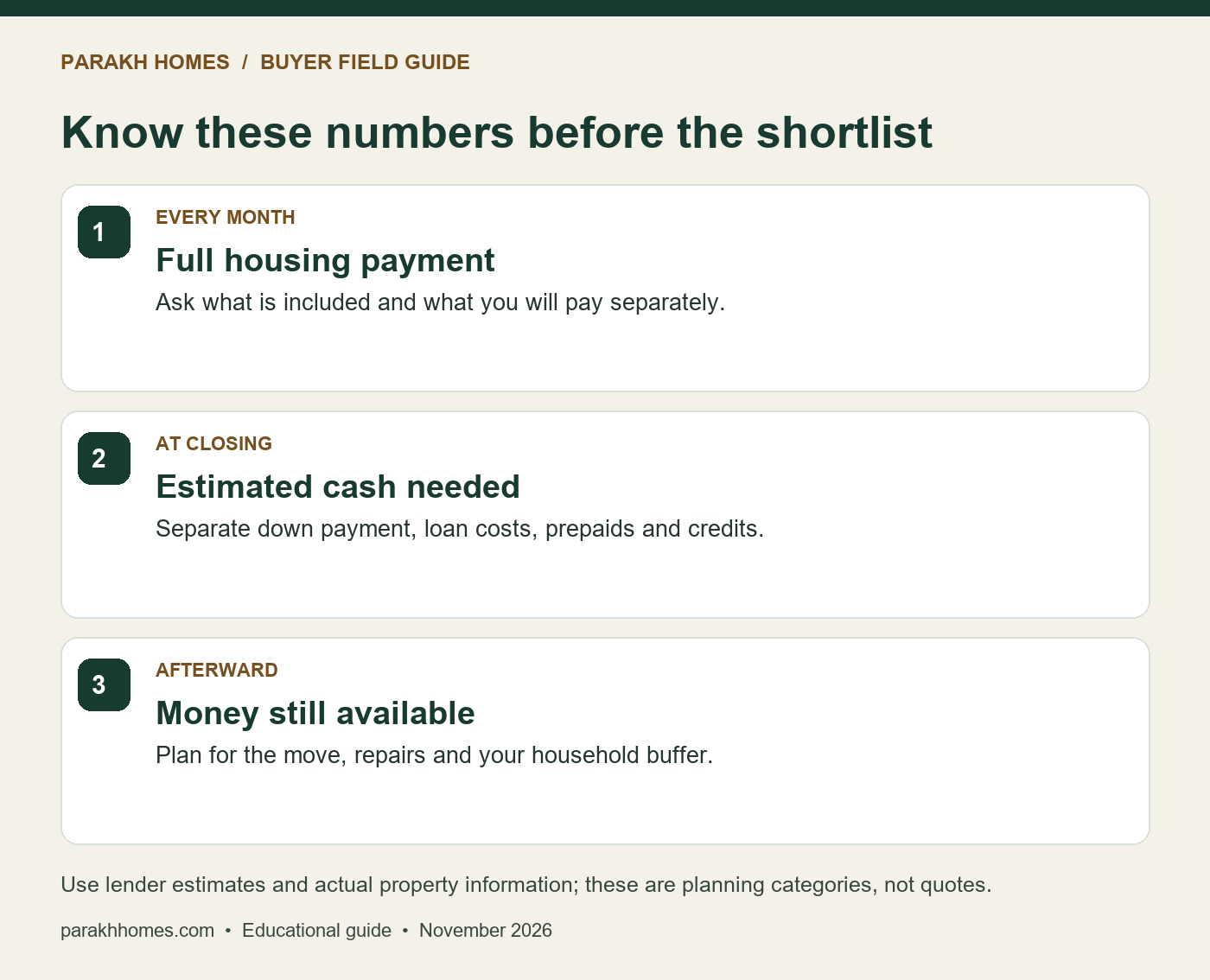
EVERY MONTH
Full housing payment
Ask what is included and what you will pay separately.
AT CLOSING
Estimated cash needed
Separate down payment, loan costs, prepaids and credits.
AFTERWARD
Money still available
Plan for the move, repairs and your household buffer.
Use lender estimates and actual property information; these are planning categories, not quotes.
The clip advises a new buyer to understand income, credit and down payment, then request a financing estimate. This guide adds a practical first-week sequence so you can turn those figures into a useful Northern Virginia home search.
Number one: what will the full monthly payment be?
Ask the lender to separate principal and interest from taxes, insurance and any mortgage insurance. Identify association dues and other housing expenses that may be paid outside the loan payment. CFPB’s Loan Estimate explainer helps identify the payment components and estimated costs. Reading a Loan Estimate.
Do not assume that a principal-and-interest quote is your complete monthly housing cost. Equally, do not add an expense twice if it is already included in the lender’s total.
Number two: how much cash is needed to close?
Ask for a breakdown of the down payment, loan costs, other closing charges, prepaids and any credits or deposits already accounted for. Compare the estimate with the money that is actually available and eligible for the transaction.
Use a simple distinction when reviewing the figures: money needed once to complete the purchase versus money needed repeatedly after moving in. Both matter, but they should not be mixed into one vague “affordability” number.
Number three: what remains after the purchase?
Decide what household buffer you want to preserve, then ask the lender whether the loan has separate reserve requirements. Your own comfort plan should also consider moving, necessary work and irregular bills.
As a planning exercise, imagine the first month includes a moving bill and a repair. Would the proposed closing leave you dependent on a new credit card? If so, revisit the purchase scenario before treating the maximum down payment as the best down payment.
What should you do in the first week?
- Gather the lender’s requested income, debt and asset information.
- Ask for a payment and cash-to-close scenario based on realistic assumptions.
- Separate your comfortable payment from the largest loan discussed.
- Identify the areas and home features that fit that scenario.
- Review the first specific addresses before making decisions from a generic estimate.
A preliminary worksheet can help you plan, but ask whether you have received a formal Loan Estimate or an informal illustration. CFPB explains that a Loan Estimate is not dependent on supplying every verification document first. Applying for a mortgage and requesting estimates.
Replace broad local assumptions with the actual address
For a Fairfax County property, use official real-estate resources to begin checking tax and assessment information. Verify the jurisdiction instead of assuming every “Fairfax” mailing address uses the same authority. A recorded assessment is not the same thing as the lender’s current insurance quote or your final payment. Fairfax County real-estate information.
Use our address checklist alongside the lender’s numbers. Then send Kamal your preferred areas, essential features and move timing so the shortlist reflects the whole budget.
Watch the full conversation
This article develops one topic from Kamal Parakh’s mortgage conversation. The added examples and checklists are educational tools, not the figures or outcome of an identified client’s loan. Watch the full episode on YouTube.
Build a shortlist around your actual plan
Tell Kamal your preferred Northern Virginia areas, essential home features and move timing. Have your lender confirm the financing assumptions.
Get my home shortlistKamal Parakh · Parakh Homes · Samson Properties · Equal Housing Opportunity. General education; loan eligibility, terms and property requirements depend on the program and your circumstances. Confirm financing with your lender and contract rights with an appropriate legal adviser.
Categories
Recent Posts